
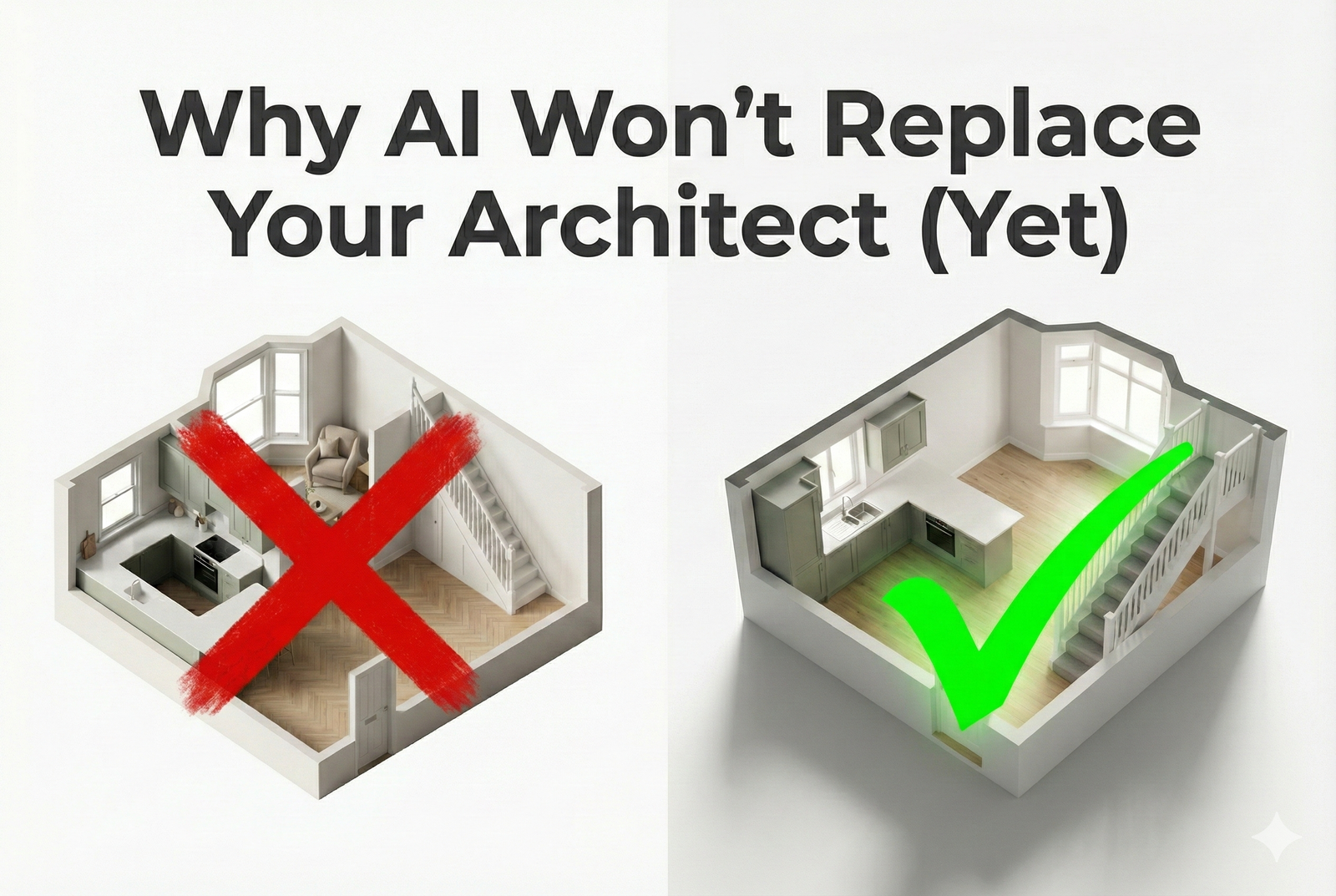
I’m not an architect. I don’t calculate load-bearing weights, I don’t stress about planning permission applications, and I definitely don’t draw blueprints for a living.
I’m an AI Designer. My job is all about visualization. I take the potential of a home: that “what if” feeling you get when you walk into a room, and I bring it to life before you spend a single penny on paint or furniture.
But lately, I’ve been hearing a lot of noise. It’s the shiny new toy that everyone is terrified of and obsessed with at the same time:
“AI is going to replace architects!” “Nano Banana Pro is a genius!” “Just upload a floor plan and let the computer do the work!”
It sounds incredible, right? The idea that we can bypass the hard work and just click a button. But is it actually true? Or is it just clever marketing?
As someone who uses advanced AI tools every single day to run my business, I decided to put my “digital team” to the ultimate test.
I wanted to see if an AI-even a “clever” one like Nano Banana Pro-could actually understand the nuances of a real-world British home, or if it would just make pretty, expensive mistakes.
So, I hopped on the ultimate source of truth (hopefully) for all of us property lovers: Rightmove.
The Subject: A Tricky Terrace in Watford
I found a standard starter home on Appletree Walk. It’s a classic 1-bed terrace, the kind many of us start out in or look to invest in. It had good bones, but it came with a very specific layout quirk typical of the 90s: a dated archway separating the kitchen from the living room.
You know the one. It chops the flow of the house in half, making the kitchen feel like a dark little cupboard and the living room feel much smaller than it actually is.
My Mission: To virtually knock down that archway and create a modern, open-plan space that breathes.
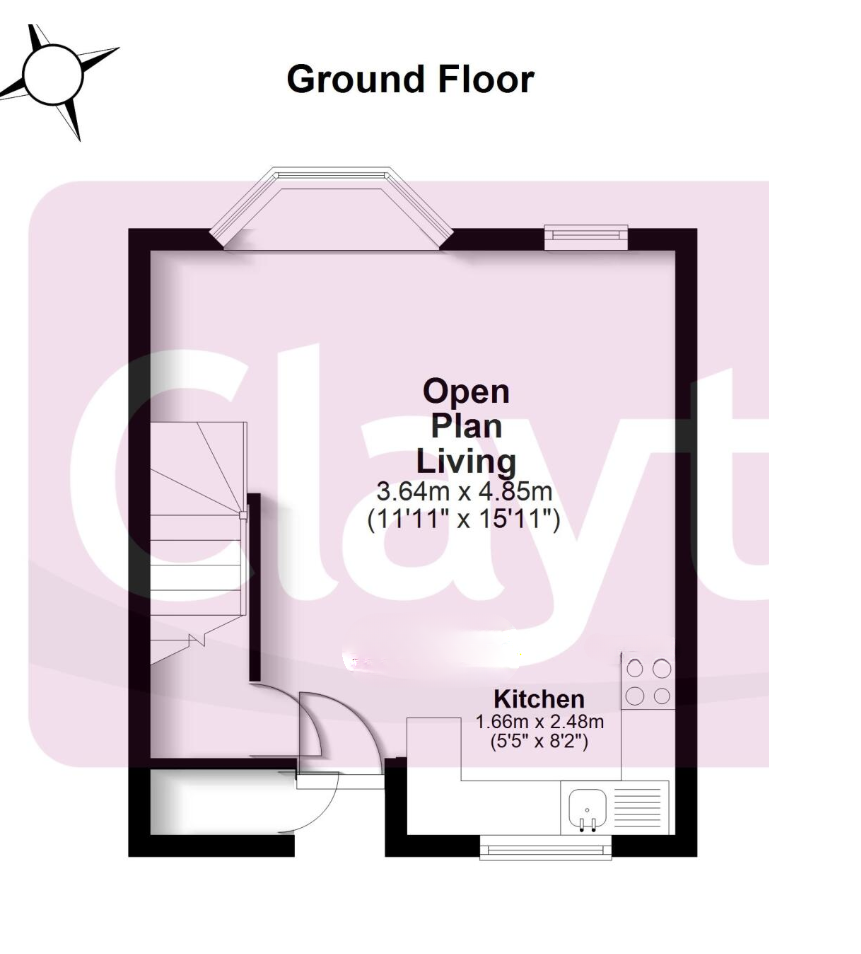
But here’s the twist: I wanted to see if the AI could do this using ONLY the floor plan.
No photos to copy. No hints about the décor. Just the raw, black-and-white lines of the estate agent’s drawing.
The Hypothesis: Calculation or Guesswork?
Tools like Nano Banana Pro are marketed as being super intelligent. We’re told they “understand” space, geometry, and architecture.
If that were true, the AI should be able to look at the symbols on the plan- the curve of the door showing which way it swings, the parallel lines of the stairs, the double lines of the windows- and build a perfect 3D replica. It should know that a toilet doesn’t go in the kitchen and that stairs need headroom.
But what I found was that AI doesn’t calculate like an engineer. It imitates like an artist.
And when it tries to imitate a floor plan without seeing the real room to give it context, things get weird very quickly.
The Failure: When “Smart” Tools Act Dumb
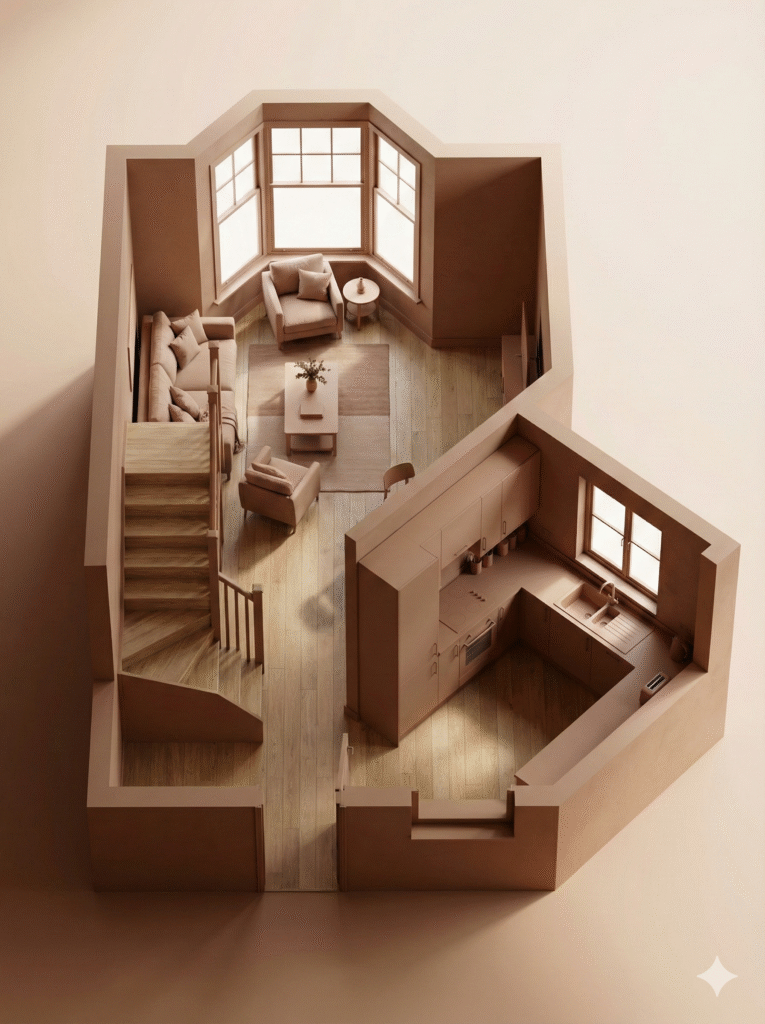
I fed the floor plan into the system and asked for a 3D cutaway. I sat back, waited a few seconds, and boom-I had a result.
At first glance, it looked stunning! The lighting was perfect, the clay textures were soft and expensive-looking, and the furniture placement was chic. It looked like something straight out of a glossy magazine.
But when I stopped looking at the vibe and started looking at the structure, I realized it was a disaster.
Share This Article:
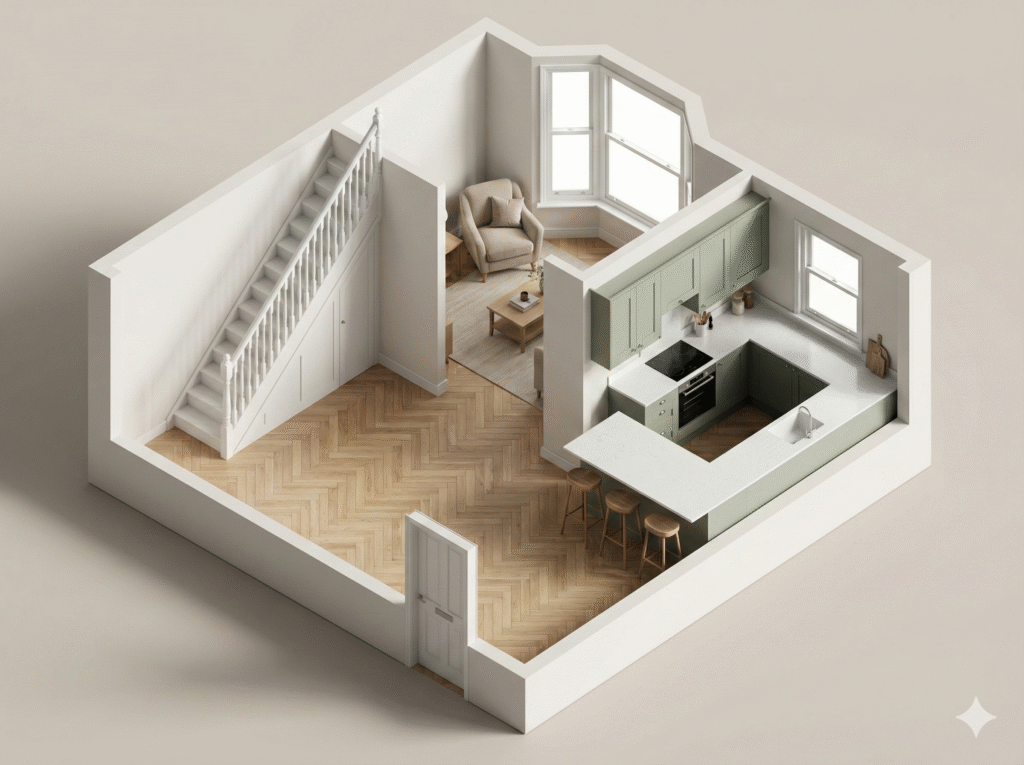
1. The Mirror Problem
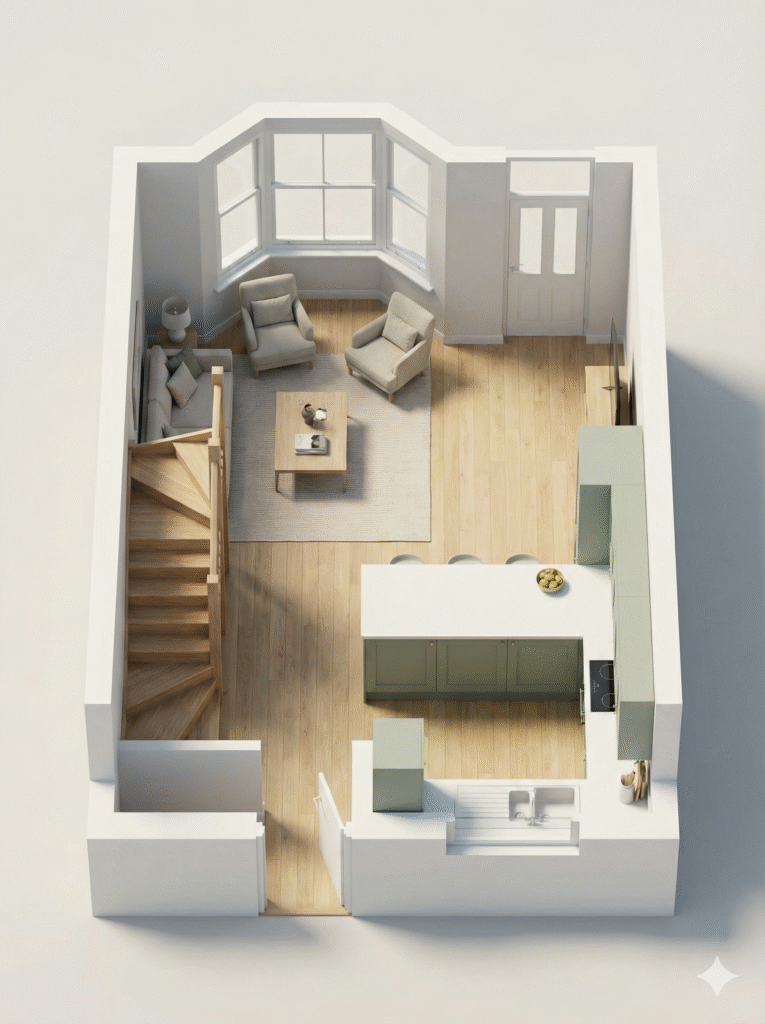
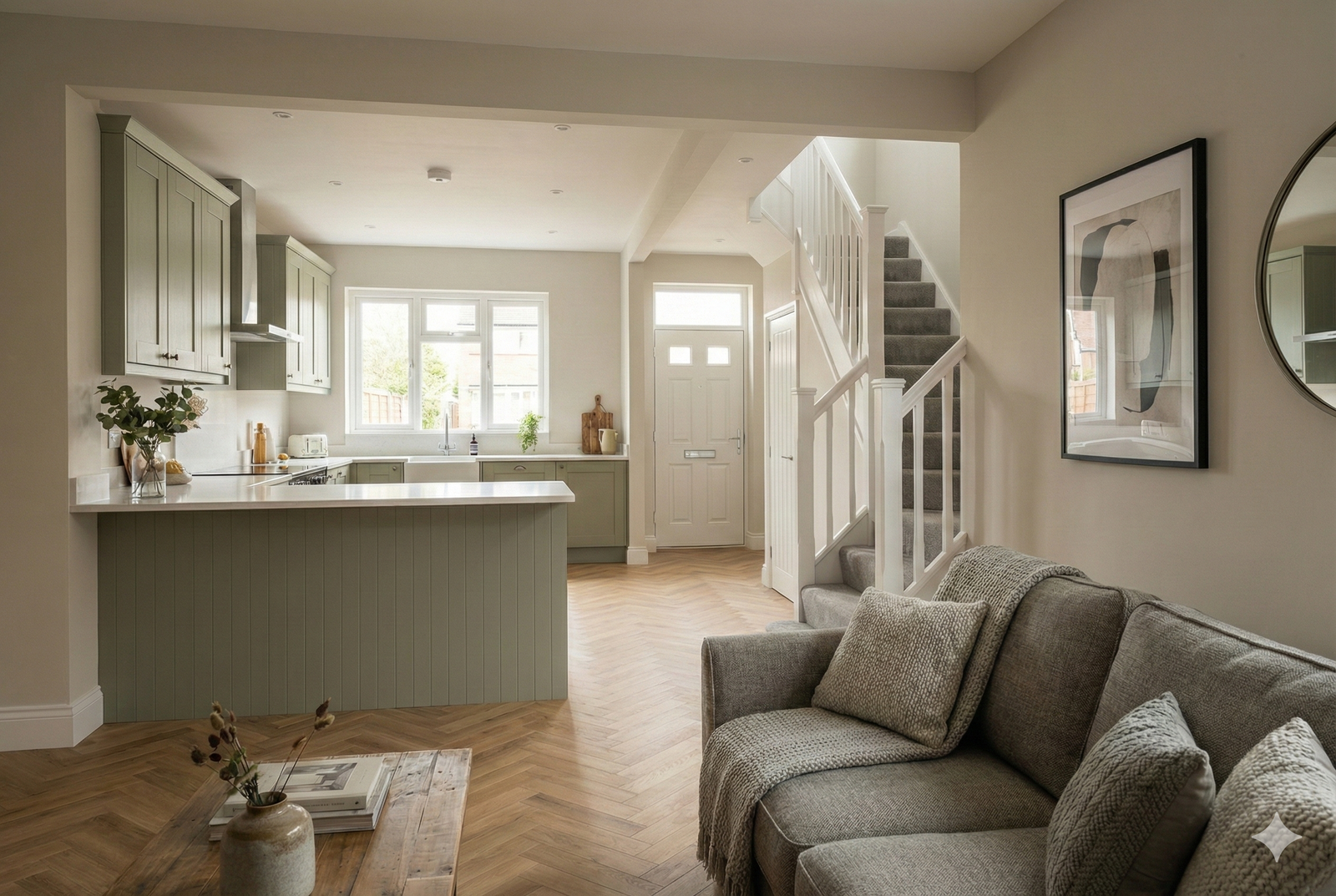
The Rightmove listing itself was a bit of a brain-teaser. The photo showed the stairs on the Right side of the room. The floor plan, however, showed them on the Left.
Now, a human architect or builder would spot this contradiction immediately. They’d stop, scratch their head, and ask, “Hey, which one is correct? Is the plan mirrored, or is the photo flipped?” They wouldn’t lay a single brick until they knew the truth.
The AI? It didn’t ask questions. It just guessed. And unfortunately, it guessed wrong! It blindly followed the lines and built a perfect mirror image of the house.
If you were an architect using this tool to plan a staircase renovation, you’d be in big trouble. Imagine ordering expensive custom joinery or booking a carpenter based on this image, only to find out the entire room is flipped the other way around. That’s a budget-destroying mistake.
2. The “Hallucination” Window
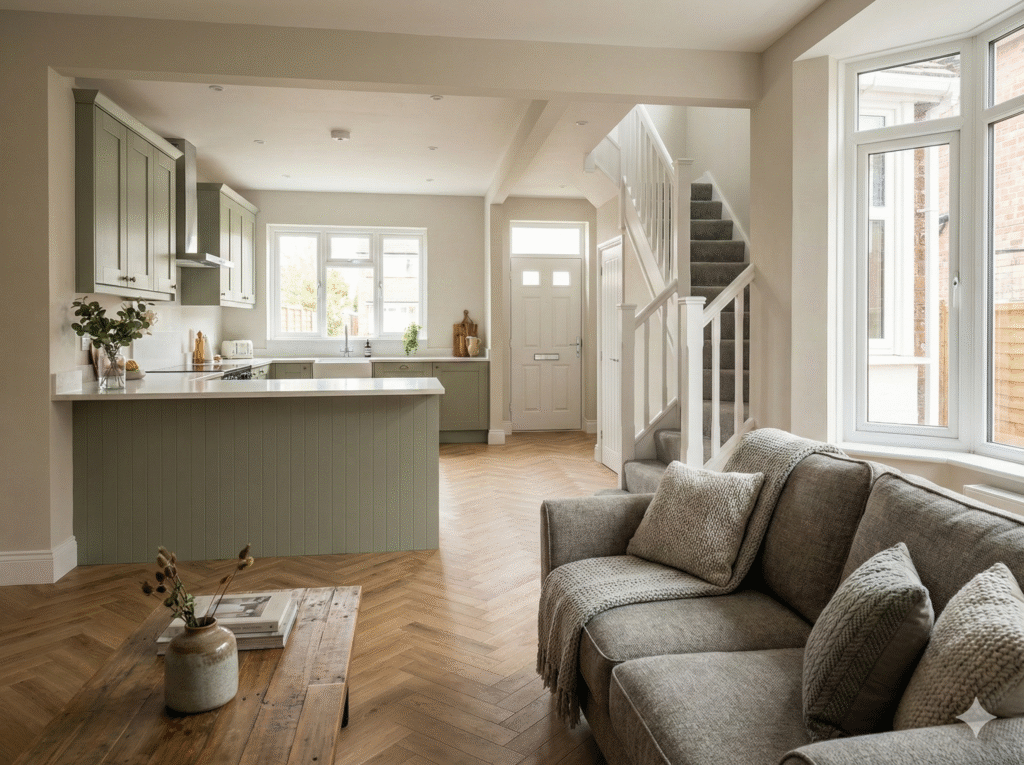
Then came the classic AI party trick: making things up because it thinks they look nice.
The AI noticed a long, blank wall in the living room. In its digital brain, it has learned from millions of images that “Living rooms are bright and airy.” So, it thought, “I know! I’ll put a huge window right here.”
The problem? In a terraced house, that blank wall is the Party Wall. It’s the wall you share with your neighbour.
If I’d followed this design blindly, I would’ve been trying to install a floor-to-ceiling window directly into my neighbour’s lounge! It’s funny until you realize you’ve just designed a privacy nightmare that defies the laws of physics (and planning permission).
Why “Image-to-Image” is the Secret Weapon:
This experiment proved something vital about how AI works, and it’s the golden rule we live by at AICI.
AI works best when it can SEE, not just READ.
When I feed the AI a photo of a room, it performs a miracle (well, sometimes- it takes many re-runs!). It sees the way the light hits the floorboards, it sees the corners, the ceiling height, and the radiator placement. It creates a perfect renovation because it’s imitating reality. It has a reference point.
But when I feed it a floor plan, it has to interpret logic. It has to translate abstract symbols into 3D objects. And right now, even the “cleverest” AI struggles with common sense. It sees lines, but it doesn’t understand walls.
Share This Article:
The Solution: The AI Artist as the Pilot
Does this mean AI is useless for floor plans? Absolutely not. It just means you can’t leave it on autopilot. You can’t just press “Generate” and walk away.
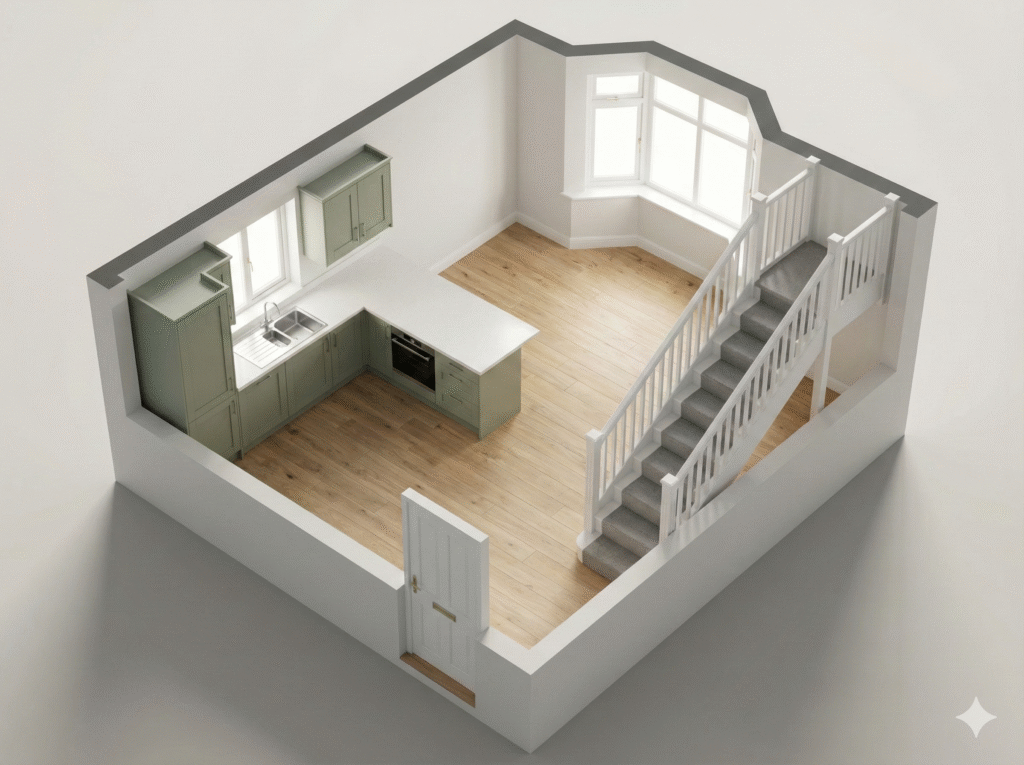
Once I realized the AI was mirroring the room and inventing windows, I stepped in. I stopped being a passive user and became the Director. I became the geometry police.
- I manually corrected the orientation, forcing the AI to put the stairs on the Right where they belong.
- I “blindfolded” the AI to the party wall, explicitly telling it, “This is solid brick, put a painting here, not a window.”
- I guided the style to ensure the kitchen peninsula didn’t look like a clunky block, refining the design until it looked sleek and usable.
The Verdict: Architects are Safe (For Now)
So, will AI replace architects anytime soon? No way.
An architect deals in safety, physics, materials, and absolute precision. AI is currently way too “dreamy” for that responsibility. It creates visions, not blueprints.
But will AI replace designers?
I believe AI will become the ultimate superpower for designers who know how to control it. It allows us to explore “what if” scenarios in minutes, rather than days.
At AICI, we don’t just press a button and hope for the best. We stress-test the technology. We catch the mirror mistakes. We block the impossible windows. We make sure the layout actually works before we make it look pretty.
We use AI to visualize the feeling of your future home, but we use our human expertise to keep it grounded in reality.
Have a tricky room you can’t visualize?
Don’t rely on a robot’s guess based on a blueprint. Send us a photo of your space, and let a human AI Designer show you what’s really possible, without the hallucinations.
Stay updated on what’s new- follow our Facebook Page:
Our Services:
The Peek
£29"Just show me the peace."
- 2 x Future Room Visuals: We show you your exact room, quieted.
- Recipe Card 1: The Colour Palette (Tones that signal safety).
- Note: No furniture list or style guides included.
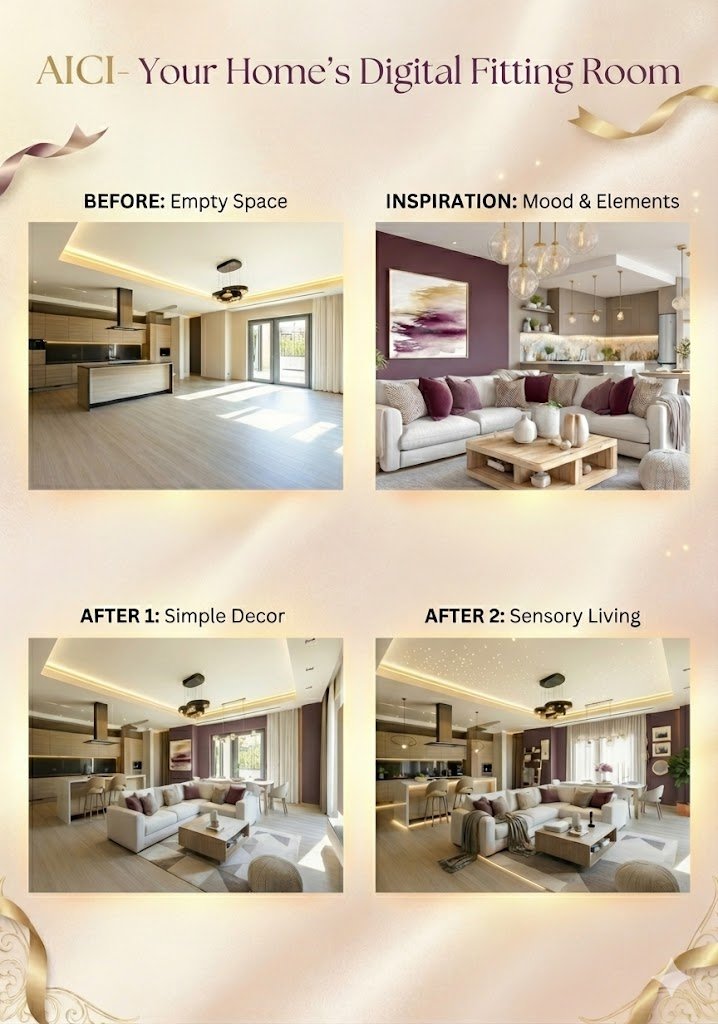 Room Visual
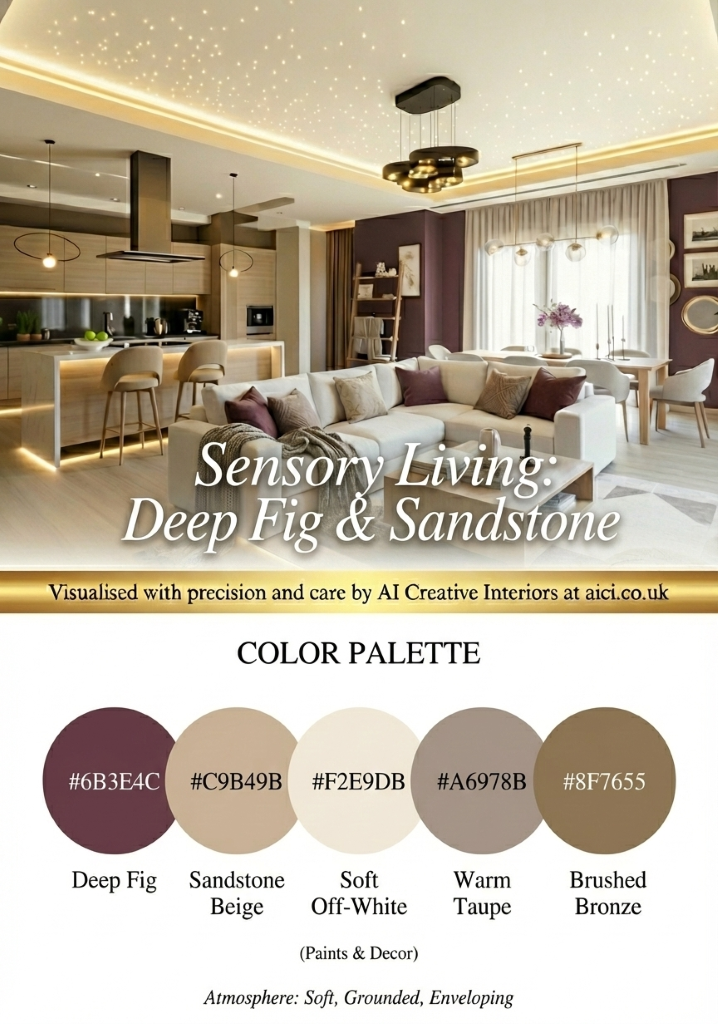 Card 1: Colour
Get The Look
£149"Give me the full recipe to create this feeling."
This package provides the visual ingredients (Furniture Styles & Decor Types) to help you find items yourself. It does not include clickable shopping links.
- 3 x Future Room Visuals (Different variations)
- Card 1: Colours (Soft, grounding tones)
- Card 2: Texture Layer (Knits, woods, velvet)
- Card 3: Furniture Selection (Style guide)
- Card 4: Finishing Touches (Ceramics, candles)
- Card 5: Life Layer (Plants & Greenery)
- Card 6: Atmosphere (Lighting ideas)
- Card 7: Zoning Layout (Visual Flow Guide)
3 x Visuals
Card 1: Colour
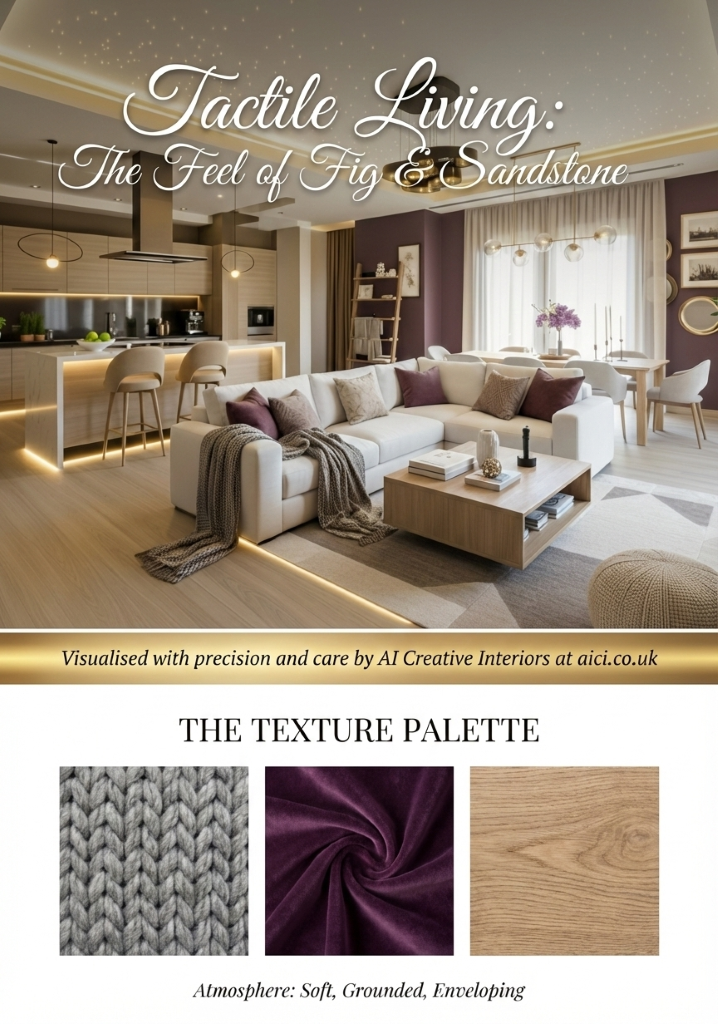 Card 2: Texture
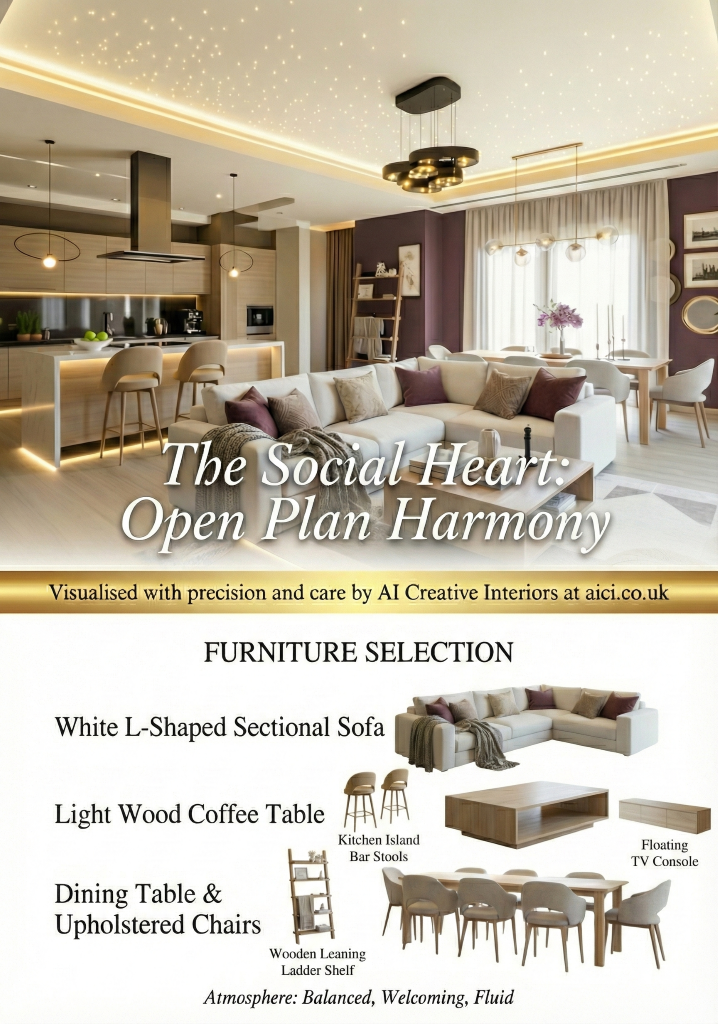 Card 3: Selection
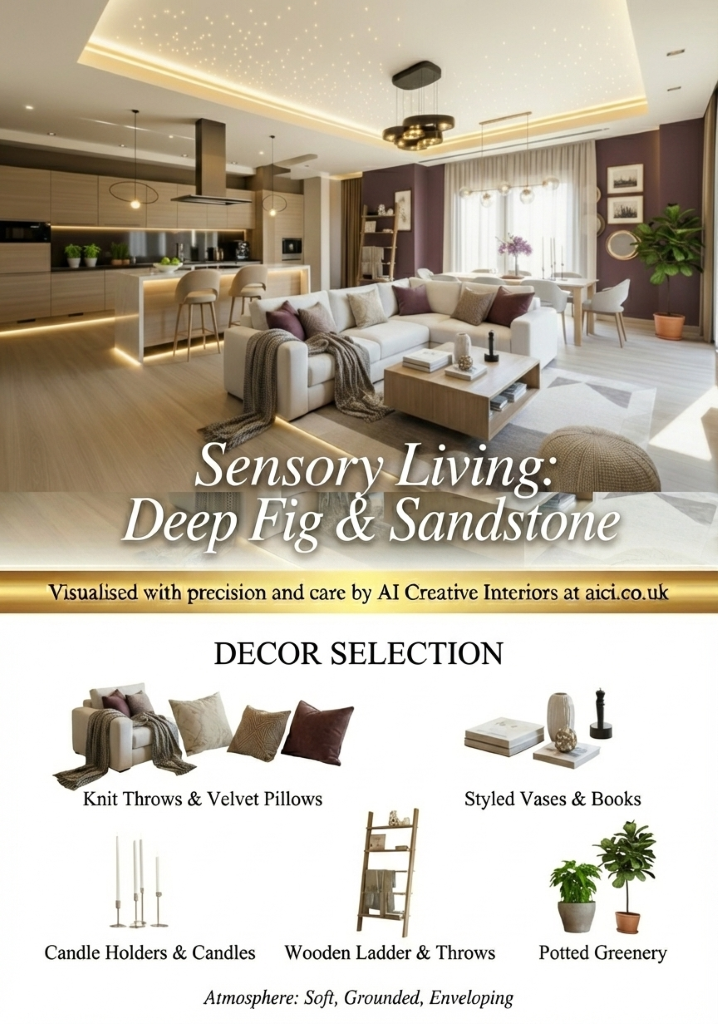 Card 4: Decor
 Card 5: Life
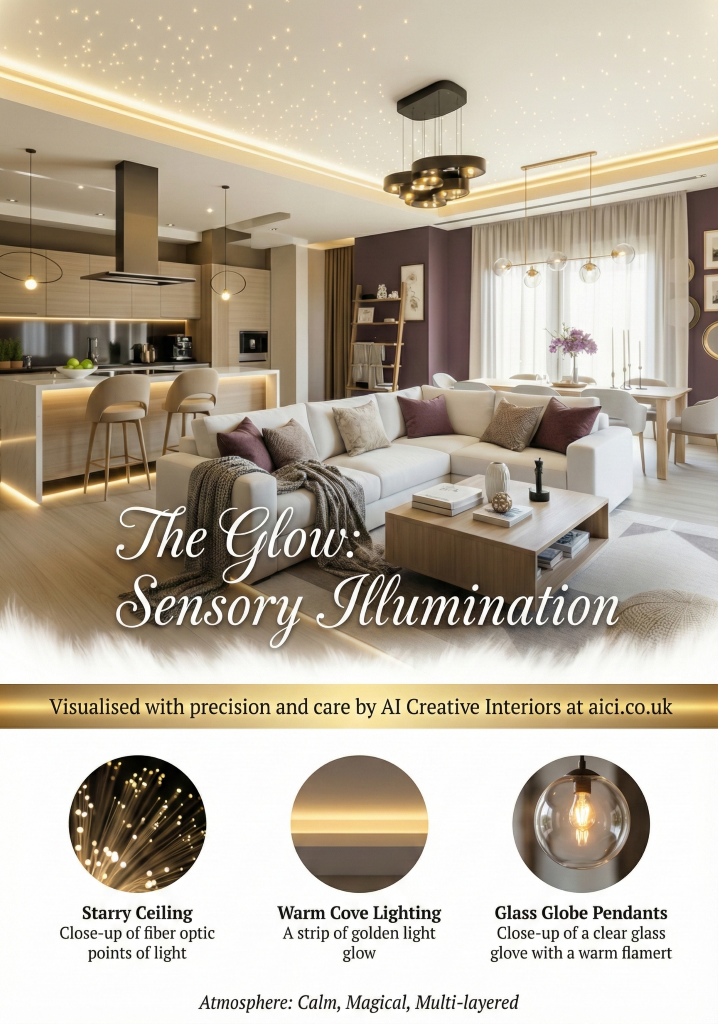 Card 6: Light
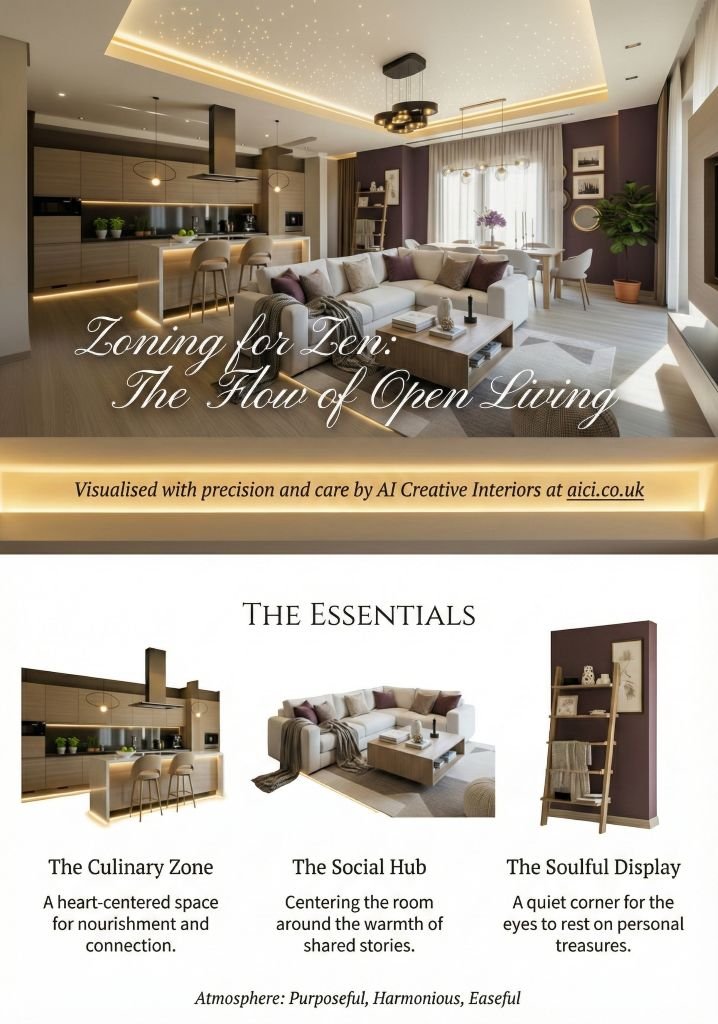 Card 7: Zoning
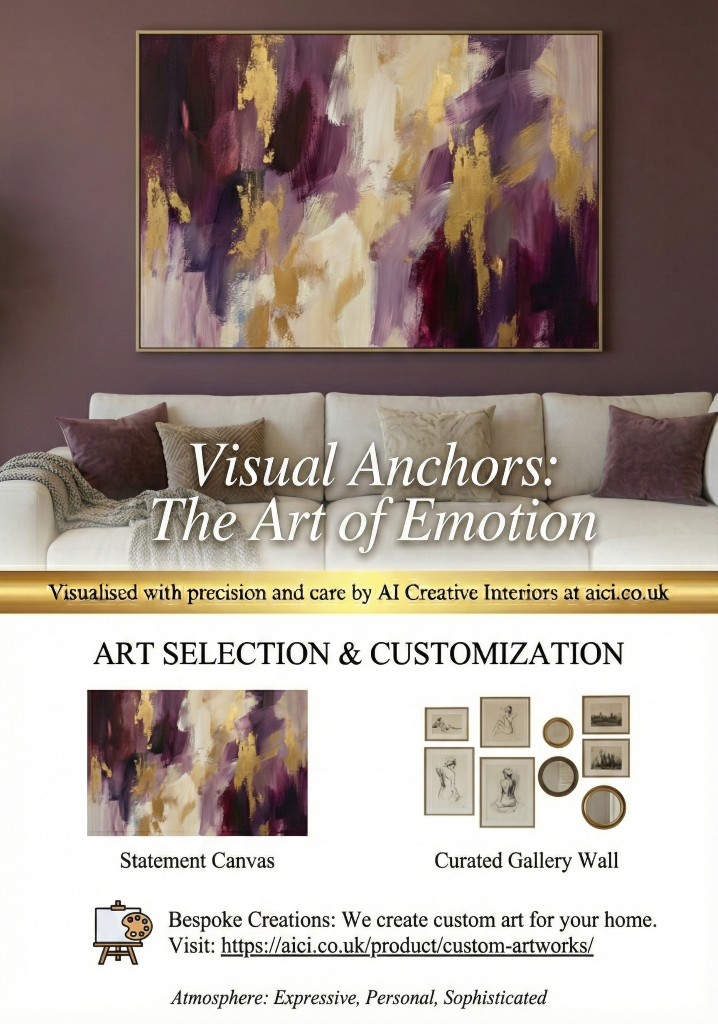
The Finishing Touch: Custom Art
Need art that truly anchors the room? We create custom artwork based on your sensory profile.
View Art Packages →The Shopping List
£349"Help me make this real, without the stress."
- Everything in Option 2 (All 7 Recipe Cards)
- The Master Shopping List: I guide you to exact items in UK stores.
- Budget Match: 'Splurge' or 'Save' options found for you.
- Personal Note: Why we chose these specific items for you.
The Master List
Clickable UK Links
+ Budget Match
Colour
Texture
Furniture
Decor
Life
Light
Zoning

